December 9, 2011

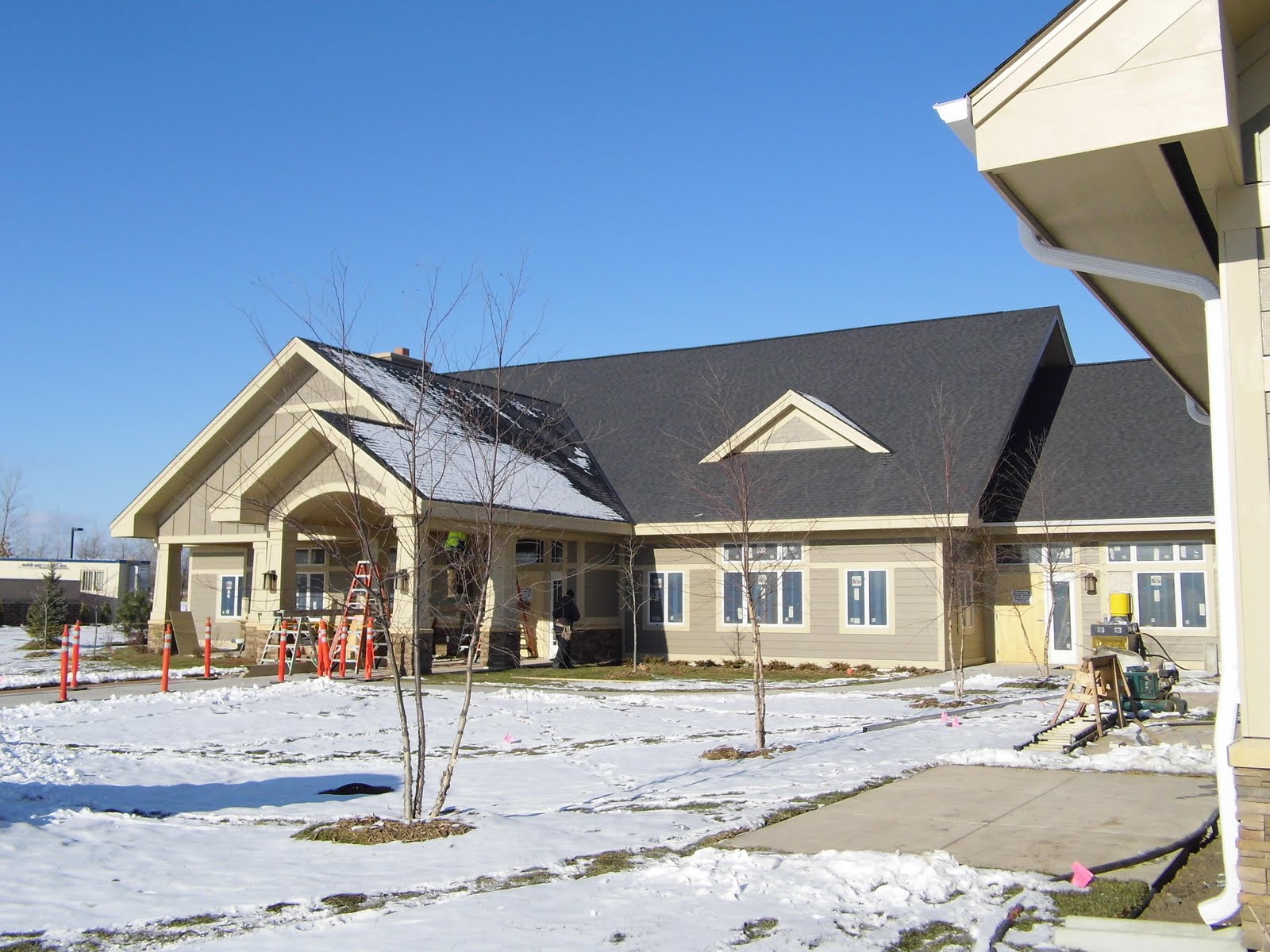
J.A. Wedum Hospice House Nearing Completion


The J.A. Wedum Hospice House is nearing completion and is slated to be open early in 2012. Exterior work is essentially complete, with interior work on millwork, trim, fixtures and carpeting to be completed in the next few weeks. Congratulations to Allina and its partners on the new facility.

The Project Architect on this job is Steve Oliver, AIA.
Feel free to give him a call for more information.
952-426-7413

December 8, 2011

Patient Self Check-In at Healthcare Facilities

Functional. Private. Efficient. These are the major benefits of an emerging trend in the Twin Cities Healthcare Industry. Like it or not, self check-in is becoming a major trend in the healthcare market.

As designers of health-related environments, we first began seeing this concept in the dental field, specifically used more frequently by orthodontic clinics. The reason being that the orthodontic patient makes frequent visits to the clinic for the maintenance of braces. In this regard, self check-in is an extremely efficient process geared toward getting the patient in and out of the office quickly and efficiently with the management of their healthcare plan.

Today, we see self check-in making its way into the healthcare environment for a similar, but expanded set of reasons. Self check-in puts the patient in control of their medical visit. It provides a level of privacy that is extremely important to some people. It allows patients to input the reason for their visit, and share symptoms and concerns in a confidential manner. Many kiosks on the market today can go so far as to assign the patient checking in with a number that is then called when the staff is ready to bring the patient back. This preserves patient identity and improves staff efficiency within the clinic environment.

Check-in kiosks can also assist with the management of reception staff. Having the kiosk available will free up reception staff allowing them to devote more personal time to the patients that require extra assistance, such as the new patient requiring the completion of paperwork, or the patient with new insurance coverage. The average time patients spend waiting to see a health-care provider is 22 minutes, and some exam procedures stretch for hours, according to a 2009 report by Press Ganey Associates, a health-care consulting firm, which surveyed 2.4 million patients at more than 10,000 locations. Orthopedists have the longest waits, at approximately 29 minutes; dermatologists the shortest, at 20. The report also noted that patient satisfaction dropped significantly with each five minute interval of waiting time.

Below are Some Examples of Check-In Kiosks which we have integrated into some recent projects. Feel free to contact us if you are interested in more information.

November 8, 2011

IIDA Fusion 2011

The Northland Chapter of IIDA – International Interior Design Association – hosted its 11th annual Fusion+Fashion Event at The Varsity Theater on November 4th, 2011, featuring yet another creative explosion of runway fashion. The action-packed benefit proudly supported the local Minneapolis charity, People Serving People. Local designers squared up in a Project Runway style fashion show creating garments out of non-traditional materials.

Mohagen/Hansen was one of many firms to participate in the event. Two dresses were created, showing both an elaborate couture gown and a simplified ready‐to‐wear dress. The dresses are made of meticulously folded iridescent wallpaper, generously donated by Carnegie, called 'Pizazz'. The light beautifully played off of this material, giving the garments just that ‐ 'Pizazz' – which was carefully considered when designing these pieces. The dresses were developed by Mohagen/Hansen interior designers Sue Welk Kimal, Catherine Sweetman, Lindsey Miller, Nancy Binger and Lyn Berglund. Sue Welk Kimal and Nancy Binger modeled their creations during the runway show.


October 28, 2011

Welcome to the Team: Nathan Potratz

Mohagen/Hansen continues to grow with the addition of Nathan Potratz.  Nathan comes to our office after spending 4 years working in Oregon at architecture firm specializing in Healthcare Design.  Before that, Nathan graduated from Iowa State University with a 5 year Bachelor of Architecture Degree.  He brings a energetic attitude, diverse skill set, and a great work-ethic to our team! 

We asked Nathan a few questions, get to know him more below:

What is the last book you read? The Most Important Year in a Man's Life
What is your favorite activity when you are not at work? Going out for Thai food with my wife Polly.
Who inspire you? Steve Winnett (one of my supervisors when I was an intern)
What do you love most about your being an architect? Problem Solving: When you come up with a solution/design/layout that fits all the constraints, it's such a rewarding feeling of accomplishment.

October 7, 2011

Making Progress...

Construction of the Allina: J.A. Wedum Residential Hospice House in Brooklyn Park, is well underway and progressing on schedule. The exterior envelope is taking shape and should be completed in the next couple of weeks – well before the snow flies! With the work that has been completed, we are able to see how the building massing is fitting very well with the context of the surrounding area. Great weather and quality craftsmanship have allowed the work to progress in an efficient manner. Best news of the day – the Owner is very pleased with how things are coming together. We are all enjoying watching this important project take shape!


To see more about this project, check out this earlier blog post about the ground breaking.  J.A. Wedum Residentail Hospice Groundbreaking

September 22, 2011

Fast Turnaround / 3D Modeling

In general, when clients need a quick turnaround for presentation graphics or renderings, the level of detail usually goes down.  Time is essential for creating realistic looking renderings, and when things need to be done quickly, the final products usually have a more "sketchy" feel.  This type of look is often appropriate since the project is usually in the early phases of design and neither the design team or the client wants the design to look as though it's "set in stone".  On certain occasions however, a more realistic rendering is desired on a tight timeline.  We are happy to say that we now have the capability of bridging the gap between fast turnaround and highly detailed renderings. A good example of this can be shown from the images below which are from a recent project that had to be designed, modeled, and rendered in under 3 days.  The project was started on a Monday afternoon, and in the hands of the client by Wednesday morning (including time for a couple slight revisions). 

Step One 1: (Develop a solid design, using accurate dimensions)


Step 2: (Create a model with surrounding context)


Step 3: (Add final details and render)


We were able to meet our clients deadline and they were extremly happy with the image.  Down the road they may choose to add more details (such as additional signage), but at this point this was exactly what they were hoping for.